Sample Cost, Bulk Price and Payment Terms Explained
Two numbers decide most first conversations with a factory: the sample fee and the unit price. Both are widely misunderstood. The sample fee looks high because it is not a garment price, it is an engineering cost. The unit price looks firm because it is quoted as a number, while in practice it is valid for a limited window with named exclusions. Understanding the structure behind each turns an adversarial negotiation into a workable commercial arrangement.
What Sample Fees Cover
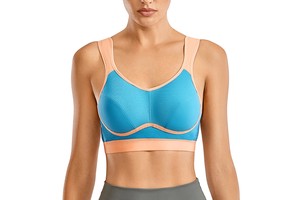
A sample fee covers pattern making, marker and grading setup, cutting a single unit, and the surcharge for buying fabric and trim below minimum. A first prototype for a cut-and-sew medium impact bra with a cut-out back, a pad pocket and a hook closure typically runs USD 80 to 200 per piece, because it absorbs a fabric minimum and several hours of pattern work.
Later stages cost less per unit: a salesman sample usually USD 40 to 80, a pre-production sample USD 50 to 100, and a size set charged per size, often at a reduced rate. Courier is charged separately and adds up quickly across four rounds.
Refundable Versus Non-Refundable
Many factories credit sample fees against bulk once the order passes a threshold, commonly 1,000 pieces or a stated order value. Ask for this in writing, with the conditions: which sample types qualify, the time limit for placing the bulk order, and whether the credit applies to development samples or only to pre-production.
Do not assume a credit. Where the factory has invested in pattern development it owns, a non-refundable fee is reasonable. Where you supplied the tech pack, asking for a credit is fair.
Price Structure and Validity
Confirm the basis first. EXW excludes everything beyond the factory gate; FOB includes delivery to the port and export clearance; CIF adds freight and insurance to the destination port. Two quotes differing by 8 percent are often just different bases.
Confirm currency and validity, normally 30 to 60 days from quotation. Beyond that, fabric and elastane prices move, and a supplier will re-quote. Ask whether the price includes an escalation clause and what index or threshold triggers it.
Standard Payment Terms
The most common structure for a first order is 30 percent deposit with the balance payable before shipment, by telegraphic transfer. Variants include 30/70, 50/50, or a deposit with the balance against a copy of the bill of lading. Letters of credit at sight are common for orders above roughly USD 50,000 and add bank cost on both sides, typically 0.1 to 0.5 percent.
Open account terms are usually reserved for established relationships after several clean orders. Sample payments are normally handled by card or an online transfer service, and the fees are the buyer's unless agreed otherwise.
Costs That Are Not in the Unit Price
Budget separately for laboratory testing, typically USD 300 to 800 per style; third-party inspection at USD 200 to 350 per inspector-day; moulded pad tooling at USD 300 to 1,200 per shape; customs duty, which for knitted activewear varies significantly by classification and origin; and freight, which for a bulky light product is driven by volume.
Also budget currency movement. A 3 percent adverse move on a large order exceeds most of the discount you negotiated.
Negotiating Without Cutting Quality
The cleanest savings come from specification, volume and continuity. Consolidating colourways, committing to a second drop in writing, using factory stock or near-stock fabric, and simplifying a trim package all reduce cost without reducing performance. Pressing a supplier to hold a price while asking for tighter tolerances and more testing produces the opposite of what you want: the cost moves somewhere you cannot see it.