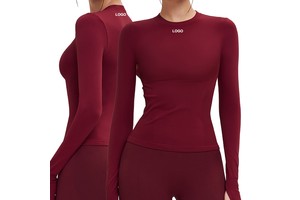
Coffee Ground Yarn for Running Tees: Odor-Free Case Study
A brand came to us with a familiar complaint: short sleeve running tees that smelled stale after a single session, even straight out of the wash. We rebuilt the fabric around Coffee Ground Yarn and followed the style through two bulk seasons.
The complaint
The smell developed at the underarm and the lower back panel, where sweat sits longest during road, trail and treadmill running. Earlier lots used a standard synthetic knit with no odour strategy, so the smell was baked into the garment within weeks. The sweat zone for short sleeve running tees is the underarm and the lower back panel, which is where the treatment has to sit.
Why the smell forms
Sweat itself is almost odourless. Bacteria on the fabric break down the fatty acids and proteins in it, and the by-products are what the wearer notices. Removing the smell therefore means either slowing the bacteria or removing the moisture they need. Every lot is measured against ISO 17299-2 deodorant test before the fabric is released for cutting.
Fabric solution
The new fabric uses Coffee Ground Yarn, which works because the fine carbon structure traps odour molecules and adds recycled content. We kept the base at lightweight single jersey and 110-150 GSM so the hand and cover stayed exactly where the brand wanted them. Cost impact is a yarn premium of about 10%, which is usually recovered through fewer returns across a season.
Test evidence
The finished fabric was checked against ISO 17299-2 deodorant test and reached odour reduction above 75% with recycled content above 3% by weight. Durability was confirmed at permanent, because the additive sits inside the fibre, which is the point at which the odour-control value starts to fall. Wear trials were run under road, trail and treadmill running rather than in the laboratory alone.
What the brand saw
Returns mentioning smell dropped to almost nothing in the next season, and the style moved onto a fixed repeat recipe. Care wording now states standard home laundering with mild detergent so the value survives in the customer's laundry. The care label states standard home laundering with mild detergent, and that wording is the condition behind permanent, because the additive sits inside the fibre.