Spain Running Apparel Sourcing Update: Demand Signals, Lead Times and Quality Priorities
Demand for running apparel in Spain has passed through several phases since 2020 and has now settled into a steadier but more demanding pattern. Growth comes less from new buyers than from existing brands widening their ranges, raising order frequency and asking for fabric programmes that hold quality across seasons. For suppliers, the commercial question is no longer whether demand exists but how precisely it can be served, and the answer is measured in specification sheets rather than sales calls.
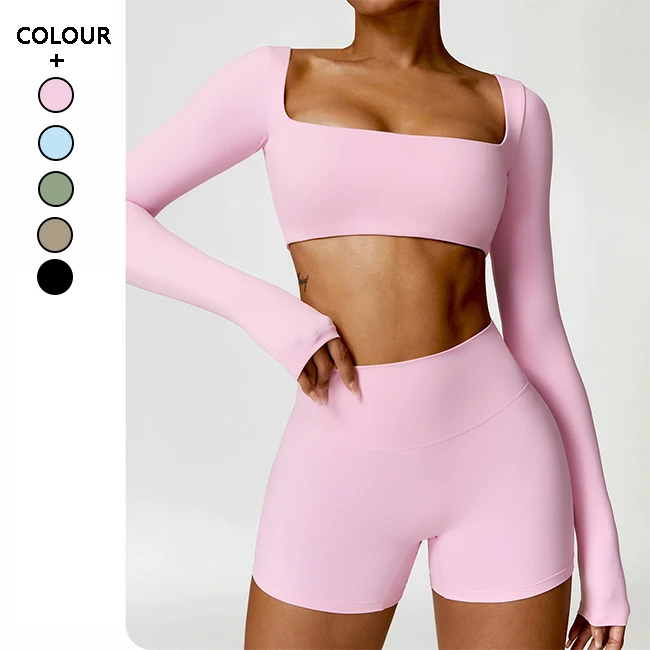
What is driving demand in Spain
- Consumers in Spain are consolidating wardrobes: fewer pieces, bought at higher quality, expected to survive a full year of washing without losing shape, colour or opacity.
- Retailers in Spain have moved promotional calendars away from deep mid-season discounts, which encourages brands to order closer to need and to value suppliers who can deliver in shorter windows.
- Private label and own-brand programmes continue to expand in Spain, bringing predictable volume with a tight specification, which suits mills able to hold consistency across repeated drops.
Taken together, these signals point to a market in Spain that buys running apparel for reasons of low weight with fast drying and chafe-free seams rather than for novelty, which makes the fabric programme — not the marketing campaign — the practical centre of the order.
Specifications buyers are writing into the brief
- Care instructions that match what the fabric can actually withstand, so the label and the product agree.
- Packing format, roll orientation and labelling, which reduce handling damage and warehouse disputes.
- Fibre content stated to the nearest percent, with the elastane type named rather than described generically as spandex.
- GSM with an explicit tolerance, commonly plus or minus five percent, measured after conditioning rather than straight off the machine.
A useful target specification for running apparel in Spain starts at 120-180 GSM fine-gauge knit, then adds the tolerances and test methods that the buyer actually audits against.
Cotton/Spandex Blend supply, cost and lead time
Dyed-to-match trims, elastic and thread are frequent sources of delay because they sit outside the main fabric programme. Listing them on the same critical path as the fabric avoids a late surprise.
Where a brand needs both cotton/spandex blend and a secondary fabric for panels, sourcing them from one mill reduces shade and hand-feel mismatches at the assembly stage.
On cost, cotton price volatility affects quotations, so a quotation for running apparel should separate yarn, knitting, dyeing and finishing rather than presenting a single blended number that cannot be defended if one input moves.
Compliance and quality expectations
Social compliance and traceability now sit alongside product quality in the approval process, and a factory that can produce the paperwork quickly wins the order as often as the one with the lower price.
Care labels should be drafted from test results rather than from habit, since an incorrect label creates a returns problem that no inspection can catch.
How suppliers should respond
- Book dyeing and machine capacity against a rolling forecast rather than a single confirmed order.
- Prepare a short document pack for compliance questions and update it every quarter.
- Offer packing and labelling options that suit the buyer's warehouse, not only the factory's convenience.
- Agree a reorder protocol in writing, including the lead time from greige, before the first order ships.
Summary
Price pressure in Spain will not disappear, but it is far cheaper to defend a sharp quotation than to recover from a late delivery or a shade failure.




