Market Demand for Sports Bras: What Importers in the United Kingdom Prioritise This Season
the United Kingdom remains a priority market for sports bras, but the basis of competition has changed. Price still matters, yet it is rarely the deciding factor when a brand is selecting a fabric partner for a full season. Reliability, documentation and the ability to reorder the same shade and hand feel three months later now carry more weight, particularly for buyers who are consolidating a long supplier list into a short one.
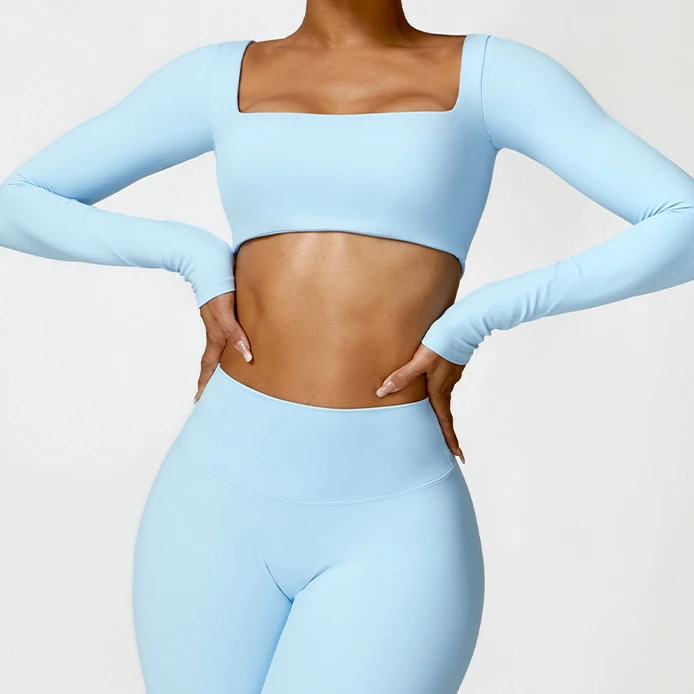
What is driving demand in the United Kingdom
- Cooling and moisture management have become baseline expectations rather than premium features in the United Kingdom, and buyers now test for them as part of routine quality control.
- Size inclusivity is a stated requirement for many retailers in the United Kingdom, which changes grading, fabric consumption and the amount of stretch recovery a fabric must deliver.
- Seasonal weather volatility in the United Kingdom has made transitional weights more important, and buyers are adding mid-weight options rather than ordering only summer and winter extremes.
Taken together, these signals point to a market in the United Kingdom that buys sports bras for reasons of controlled bounce with soft edge finishes rather than for novelty, which makes the fabric programme — not the marketing campaign — the practical centre of the order.
Specifications buyers are writing into the brief
- Pilling and snagging results, because surface appearance drives returns more often than tearing does.
- Hand feel described against a retained reference sample rather than an adjective, so that the standard survives the season.
- Certification scope for recycled content, restricted substances and chemical management where the market requires it.
- Shade consistency across bulk lots, with a defined colour difference limit against the approved standard.
A useful target specification for sports bras in the United Kingdom starts at 190-260 GSM compression knit, then adds the tolerances and test methods that the buyer actually audits against.
Moisture-Wicking Interlock supply, cost and lead time
Spandex pricing has been the least predictable input, so quotations for sports bras often carry a shorter validity period than buyers expect. Suppliers who explain the exposure clearly keep more orders than those who quietly absorb it and cut corners later.
Capacity around Chinese New Year and the summer peak fills months in advance. Brands targeting a spring or autumn launch in the United Kingdom should book machines and dye lots well before the specification is finalised.
On cost, a balanced option between cost and performance, so a quotation for sports bras should separate yarn, knitting, dyeing and finishing rather than presenting a single blended number that cannot be defended if one input moves.
Compliance and quality expectations
Colour fastness failures are among the most common reasons a sports bras programme is rejected at final inspection, so testing against the specific end use is more useful than a generic report.
Where a brand publishes a sustainability claim, the evidence behind it must survive scrutiny by a journalist as well as by an auditor. Adjectives are cheap; test reports are not.
How suppliers should respond
- Propose a seasonal colour card that fits the market palette instead of waiting to be briefed on every shade.
- Keep stock of greige or dyed fabric for the fastest-moving shades to support replenishment orders.
- Record the approved hand feel with a retained sample and a photograph so the standard outlives the development team.
- Review the previous season's defect data with the buyer and agree one improvement target per order.
Summary
The market is not asking for miracles. It is asking for accurate specifications, honest lead times and fabric that behaves the same way in the wash as it did on the sample table.




