Why Buyers in Scandinavia Are Increasing Orders for Double-Knit Compression Fabric in Seamless Activewear
The Scandinavia market for seamless activewear is one of the clearest examples of how activewear demand has matured. Retailers report that consumers still buy, but they buy differently: fewer impulse purchases, more repeat purchases of proven fits, and a strong preference for pieces that perform as promised after fifty washes. That behaviour translates directly into what buyers write into a fabric enquiry, and it explains why double-knit compression fabric has become a frequent starting point for those conversations.
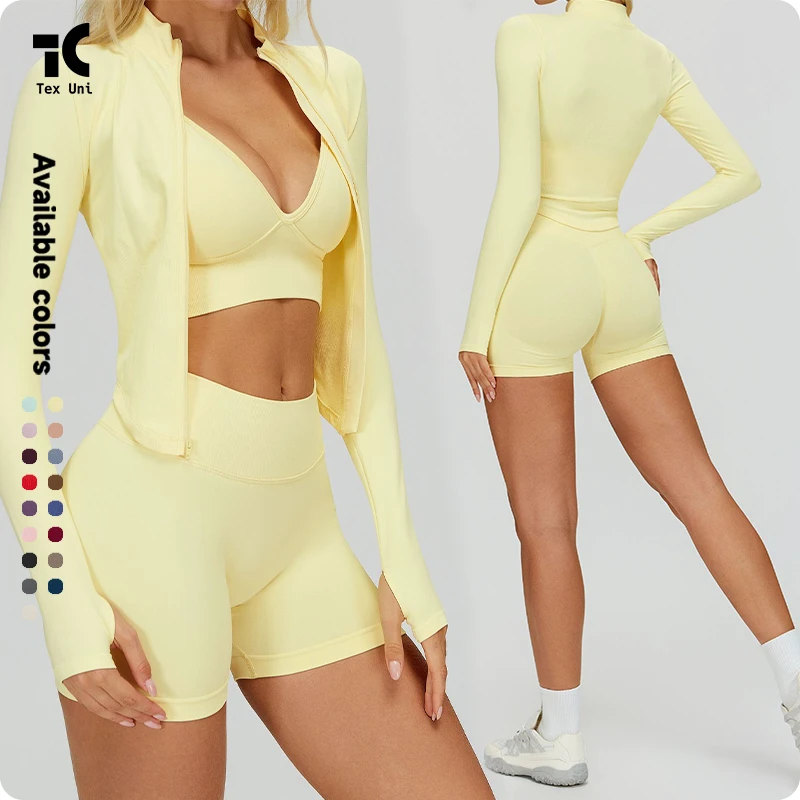
What is driving demand in Scandinavia
- Racquet and paddle sports remain among the fastest-growing participation categories in Scandinavia, and the apparel that goes with them is lighter, more colourful and replaced more often than traditional gym wear.
- Consumers in Scandinavia are consolidating wardrobes: fewer pieces, bought at higher quality, expected to survive a full year of washing without losing shape, colour or opacity.
- Retailers in Scandinavia have moved promotional calendars away from deep mid-season discounts, which encourages brands to order closer to need and to value suppliers who can deliver in shorter windows.
Taken together, these signals point to a market in Scandinavia that buys seamless activewear for reasons of zone-engineered support with minimal seam bulk rather than for novelty, which makes the fabric programme — not the marketing campaign — the practical centre of the order.
Specifications buyers are writing into the brief
- Dimensional stability after three to five home laundering cycles, expressed as a percentage change.
- Pilling and snagging results, because surface appearance drives returns more often than tearing does.
- Hand feel described against a retained reference sample rather than an adjective, so that the standard survives the season.
- Certification scope for recycled content, restricted substances and chemical management where the market requires it.
A useful target specification for seamless activewear in Scandinavia starts at 150-220 GSM circular-knit polyamide, then adds the tolerances and test methods that the buyer actually audits against.
Double-Knit Compression Fabric supply, cost and lead time
Spandex pricing has been the least predictable input, so quotations for seamless activewear often carry a shorter validity period than buyers expect. Suppliers who explain the exposure clearly keep more orders than those who quietly absorb it and cut corners later.
Capacity around Chinese New Year and the summer peak fills months in advance. Brands targeting a spring or autumn launch in Scandinavia should book machines and dye lots well before the specification is finalised.
On cost, higher yarn consumption per square metre, so a quotation for seamless activewear should separate yarn, knitting, dyeing and finishing rather than presenting a single blended number that cannot be defended if one input moves.
Compliance and quality expectations
Where a brand publishes a sustainability claim, the evidence behind it must survive scrutiny by a journalist as well as by an auditor. Adjectives are cheap; test reports are not.
Social compliance and traceability now sit alongside product quality in the approval process, and a factory that can produce the paperwork quickly wins the order as often as the one with the lower price.
How suppliers should respond
- Propose a seasonal colour card that fits the market palette instead of waiting to be briefed on every shade.
- Keep stock of greige or dyed fabric for the fastest-moving shades to support replenishment orders.
- Record the approved hand feel with a retained sample and a photograph so the standard outlives the development team.
- Review the previous season's defect data with the buyer and agree one improvement target per order.
Summary
The seamless activewear opportunity in Scandinavia rewards consistency over novelty. A buyer who can reorder the same hand feel in the same shade three months later becomes a customer for years.