
Northlane Active Norway: Odor-Free Training Tees Built on Bamboo Charcoal Filament Yarn
Northlane Active is a Norway-based activewear label whose training tees programme sells directly to consumers and through selected retail partners. The team asked us to rebuild the fabric from scratch because the sustainability team rejected a biocidal finish that was on the first sample. The target was odour control that complied with the brand's restricted substance list.
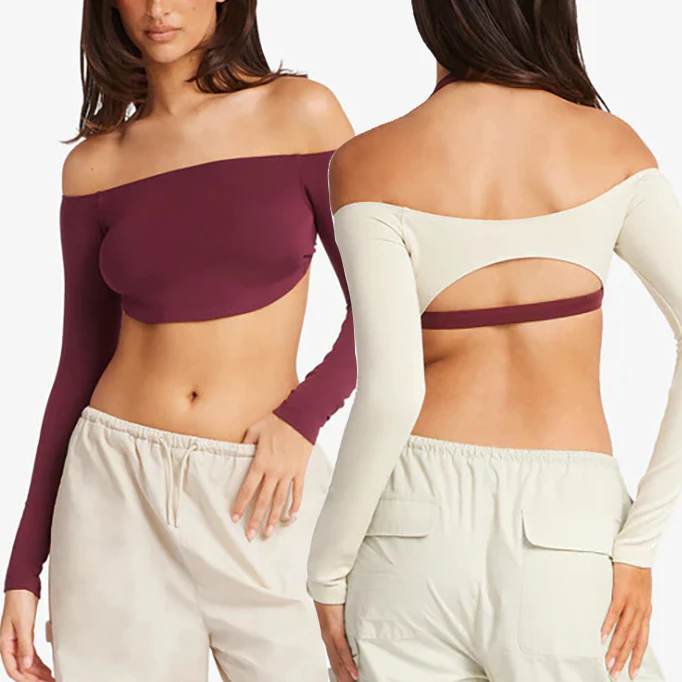
Northlane Active: odour-control swatch set for the training tees programme
The challenge
The smell built up at the underarm and the lower back, where sweat sits longest during a session. The previous fabric was a standard synthetic knit with no odour strategy, so bacteria broke the sweat down on the fabric and the smell became permanent after a few weeks. An internal compliance review before bulk booking made the problem urgent: the brand needed a fix before the next bulk booking, not a new supplier search.
The fabric solution
We built the programme around Bamboo Charcoal Filament Yarn on a polyester filament knit base. The mechanism matters: the porous carbon structure adsorbs odour molecules instead of masking them. Keeping the base at lightweight single jersey with 8% elastane and 135 GSM meant the hand, the stretch and the cover stayed exactly where the design team wanted them, because odour control changed the chemistry and the construction rather than the silhouette.

Wear trial and fit approval of the polyester filament knit fabric
Development and implementation
- Week 1: brief agreed, sweat zone mapped, target set as bacterial reduction above 95% with odour adsorption above 75% by JIS L 1902.
- Week 2–3: laboratory knits produced and tested; add-on level adjusted until the target was met with margin.
- Week 4–5: wear trial on finished training tees, assessed after eight hours of wear.
- Pre-production: wash durability confirmed at permanent inside the fibre, care wording written as standard laundering, nothing is applied to the surface.
- Bulk: fixed recipe, consolidated dye lots, JIS L 1902 repeated on every lot.
Specification delivered
| Parameter | Value |
|---|---|
| Product | Training Tees |
| Base construction | lightweight single jersey with 8% elastane, 135 GSM |
| Odour-control system | Bamboo Charcoal Filament Yarn |
| Performance target | bacterial reduction above 95% with odour adsorption above 75% |
| Test method | JIS L 1902 |
| Service life | permanent inside the fibre |
| Added cost | a 10% yarn premium |
| Certification | OEKO-TEX Standard 100, REACH compliant inputs |
Results
The fabric held its odour value through 30 home washes with no measurable drop, and care wording was updated on the hangtag to protect the value. The odour value was re-measured on bulk fabric rather than on the approval sample, so the result reflects what customers actually received. The programme is now on its third repeat with the same recipe.
“Their team explained the mechanism in one sentence, and the bulk fabric behaved like the sample.” — Northlane Active Product Team

Inline inspection and packing before the training tees shipment
Key takeaway
Odour control has to be engineered into the fabric, not sprayed onto it at the end. Defining the mechanism first and the test method second removed most of the risk in this programme. For Northlane Active, that turned a recurring complaint into a feature the brand could sell.




